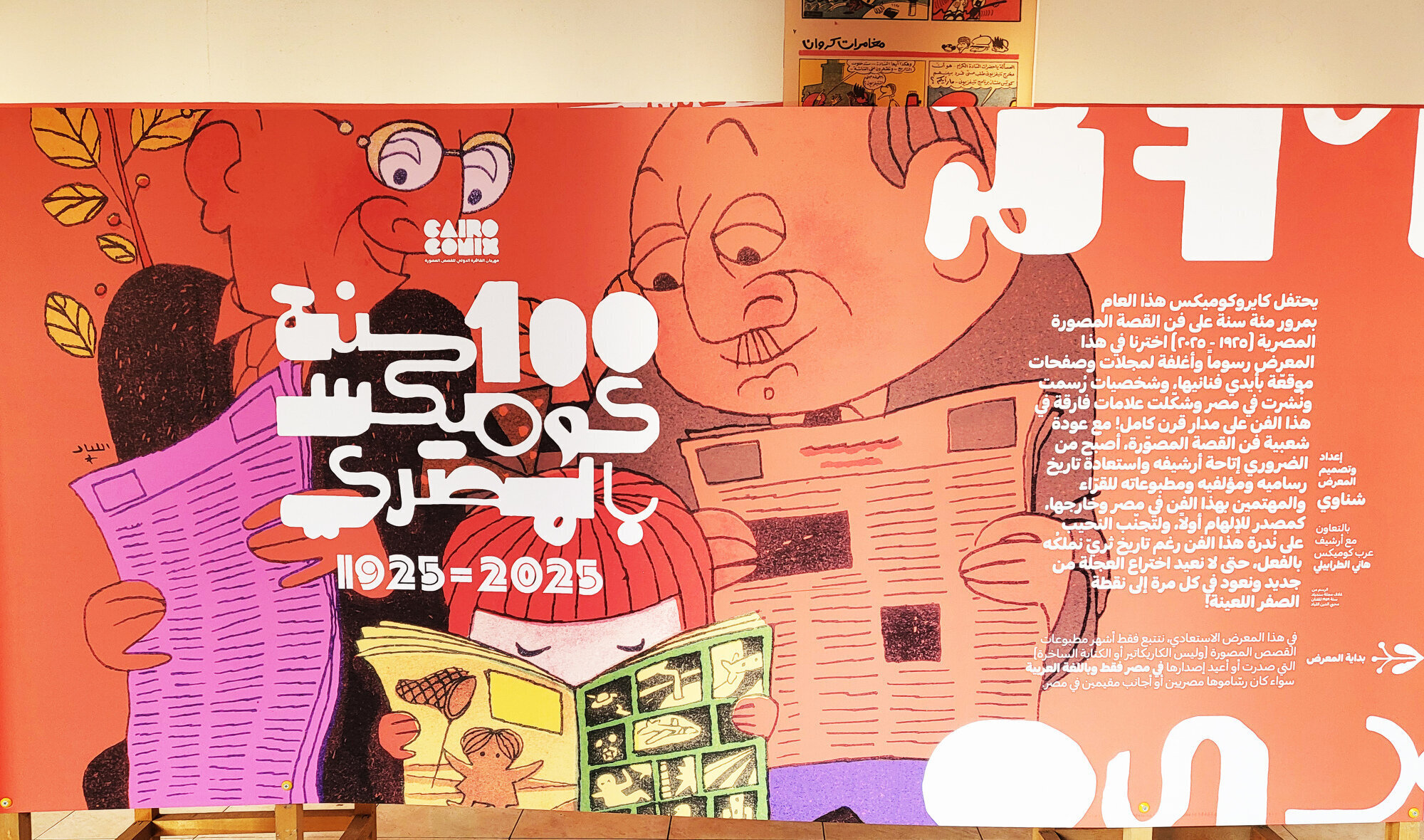
The funnest and most energetic comics festival on Earth—AKA Cairocomix—celebrated its 10-year anniversary over the past few days with an exhibition marking 100 years of Egyptian Comics (1925–2025)! Meticulously researched and curated by the one and only Shennawy, the exhibition was presented entirely in Arabic and included information that was new even to many Egyptian comics-makers—myself included. Having just emerged from the festivities, winded by lethal germs but supercharged by the energy of all things comics, I thought it apt to dedicate this edition of RESTRICTED FREQUENCY to offering an English-language overview of 100 years of Egyptian comics, largely informed by this year’s Cairocomix exhibition. |
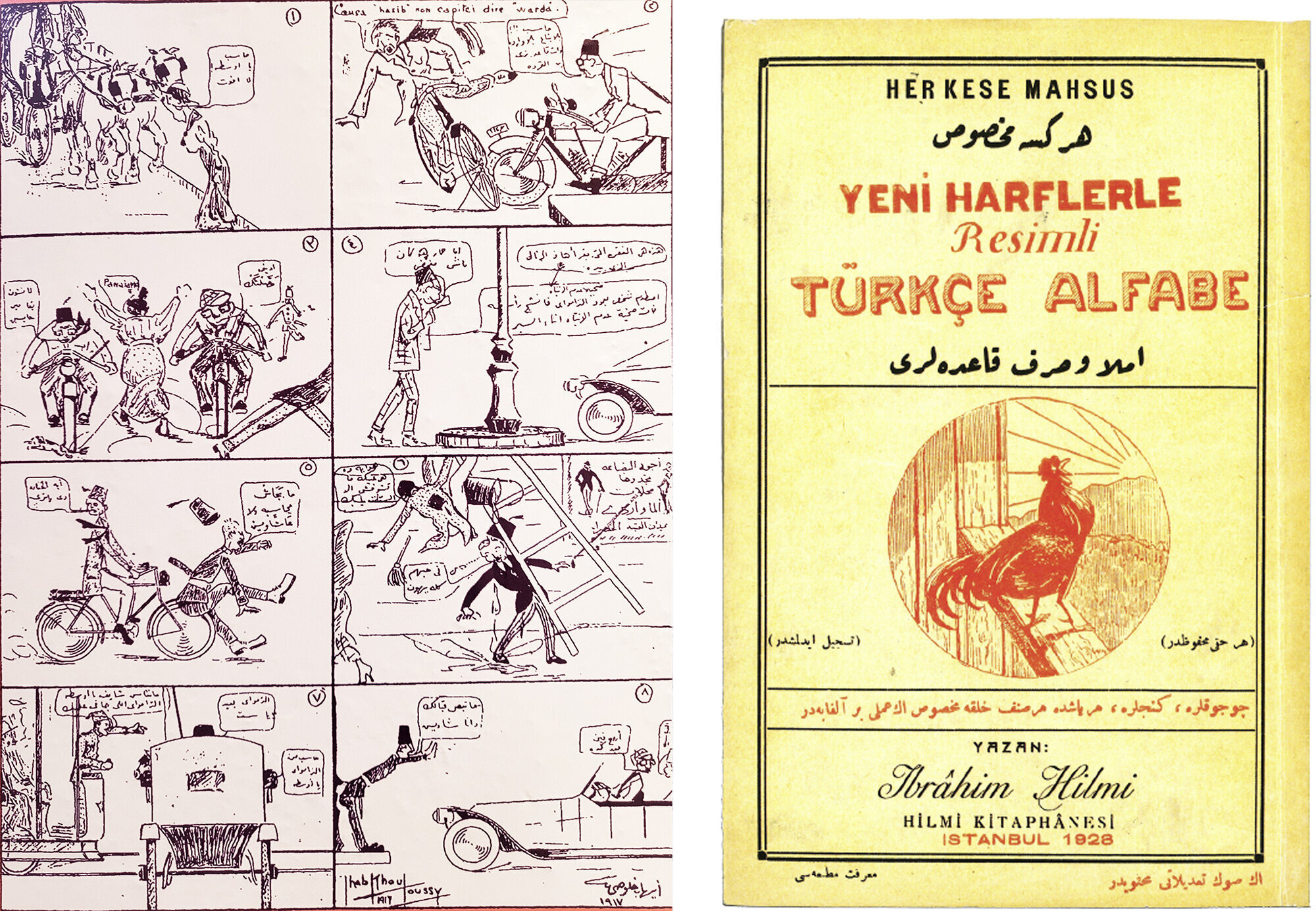
1917–1925 Contemporary Egyptian comics artist Ayman Zorkany argues that modern Egyptian comics actually go back further than 100 years and can be traced to the work of Ihab Khulusi in Al-Lataef Al-Mosawarra magazine (the closest translation I can think of would be "Illustrated Pleasantries", though that doesn’t fully capture the vibe). Khulusi was born in 1898 to Turkish parents in Cairo. His first comics appeared in Al-Lataef Al-Mosawarra while he was still in high school between 1917–1920, before he traveled to Germany to study graphic arts. When his parents later returned to Istanbul, Khulusi was summoned by his father to take a job he had arranged for him at the Turkish Ministry of Foreign Affairs. Unable to suppress his creative itch, however, he soon quit and pursued a varied career in illustration and graphic design. Khulusi’s work was evidently prominent enough to catch the eye of Mustafa Kemal Atatürk, who commissioned him to design the cover for "The New Turkish Letters", the booklet that first introduced the new Latinized alphabet for the Turkish language. From that point on, Khulusi became Ihap Hulusi Görey, and went on to become recognized as a founding figure of modern Turkish graphic design. |
|
Left: Hulusi's work in Egypt's Al-Lataef Al-Mosawara magazine in April 1917. Right: Hulusi's cover design for Turkey's The New Turkish Letters in 1928. |
1925 Al-Lataef Al-Mosawarra was more than a magazine—it was a full-fledged publishing house. Founded by Lebanese-born Iskandar Makarios, it also published Al-Awlad magazine (“The Boys”), an eight-page children’s rag dedicated almost entirely to comics! Its first issue hit newsstands in February 1923, and it would go on to influence giants of modern Egyptian culture, as admitted by the likes of Nobel laureate Naguib Mahfouz and illustration giant Bicar. |
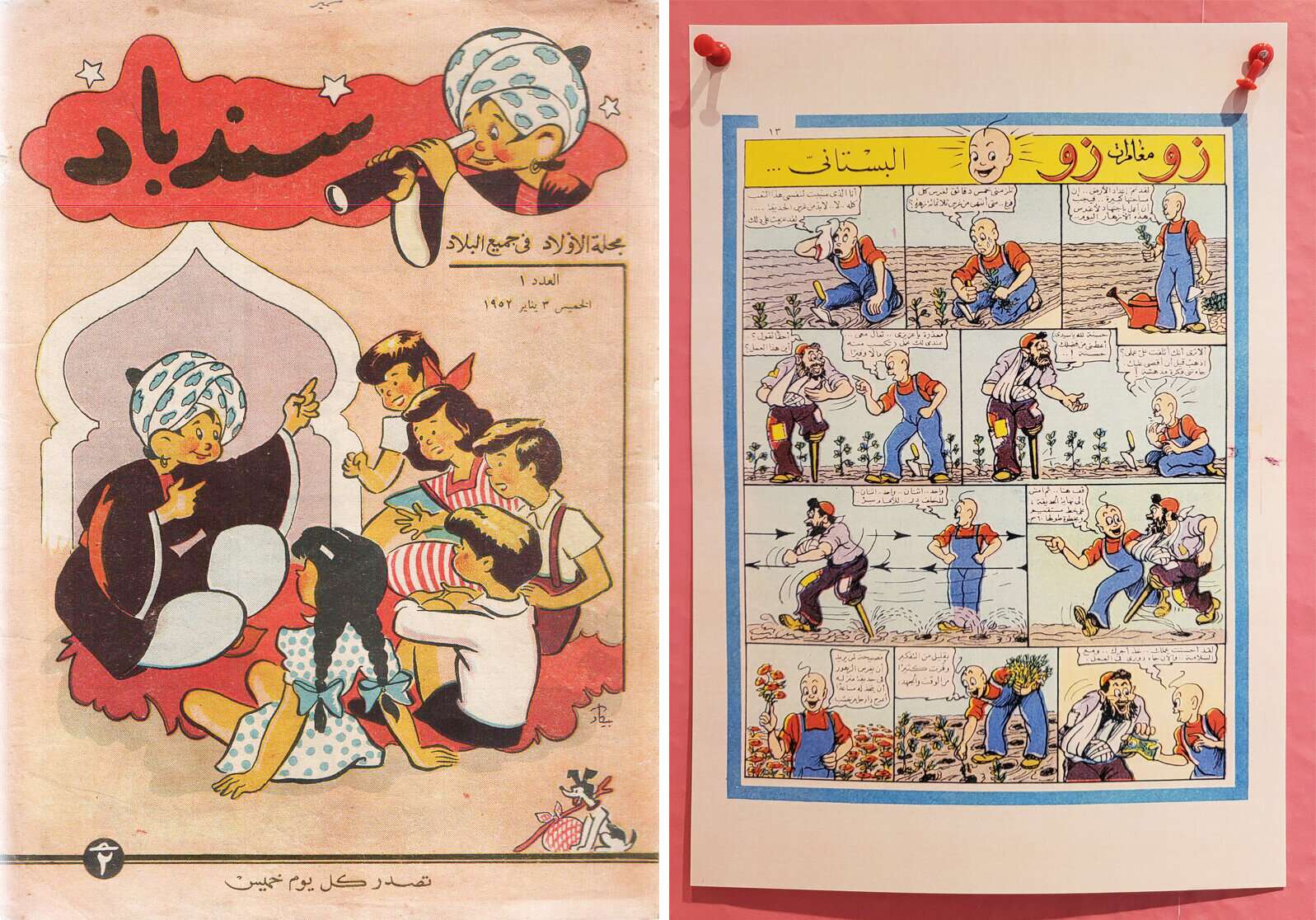
1952 January 1952 saw the launch of Sindibad magazine, a 16-page children’s publication notable for featuring two regular comics: the anthropomorphic rabbit Arnabad by Bicar, and Zouzou by Italian-born Morelli (whose life story is fascinating). One factor that undoubtedly boosted the magazine’s popularity was the patronage of the Egyptian Ministry of Education, which regularly bought 27,000 copies to distribute to schools across the country.
By 1958, Sindibad featured a wide array of soon-to-be-renowned Egyptian comics artists such as Zohdy, Labbad, Ihab Shaker, Mostafa Ramzy, and Yousef Ramses. By 1960, however, Sindibad was dethroned in popularity by its competitor Samir magazine and soon ceased publication. |
Left: Sindibad #1, dated Thursday 3 January 1952, featuring cover art by Bicar. Right: A page of Zouzou by Morelli. |
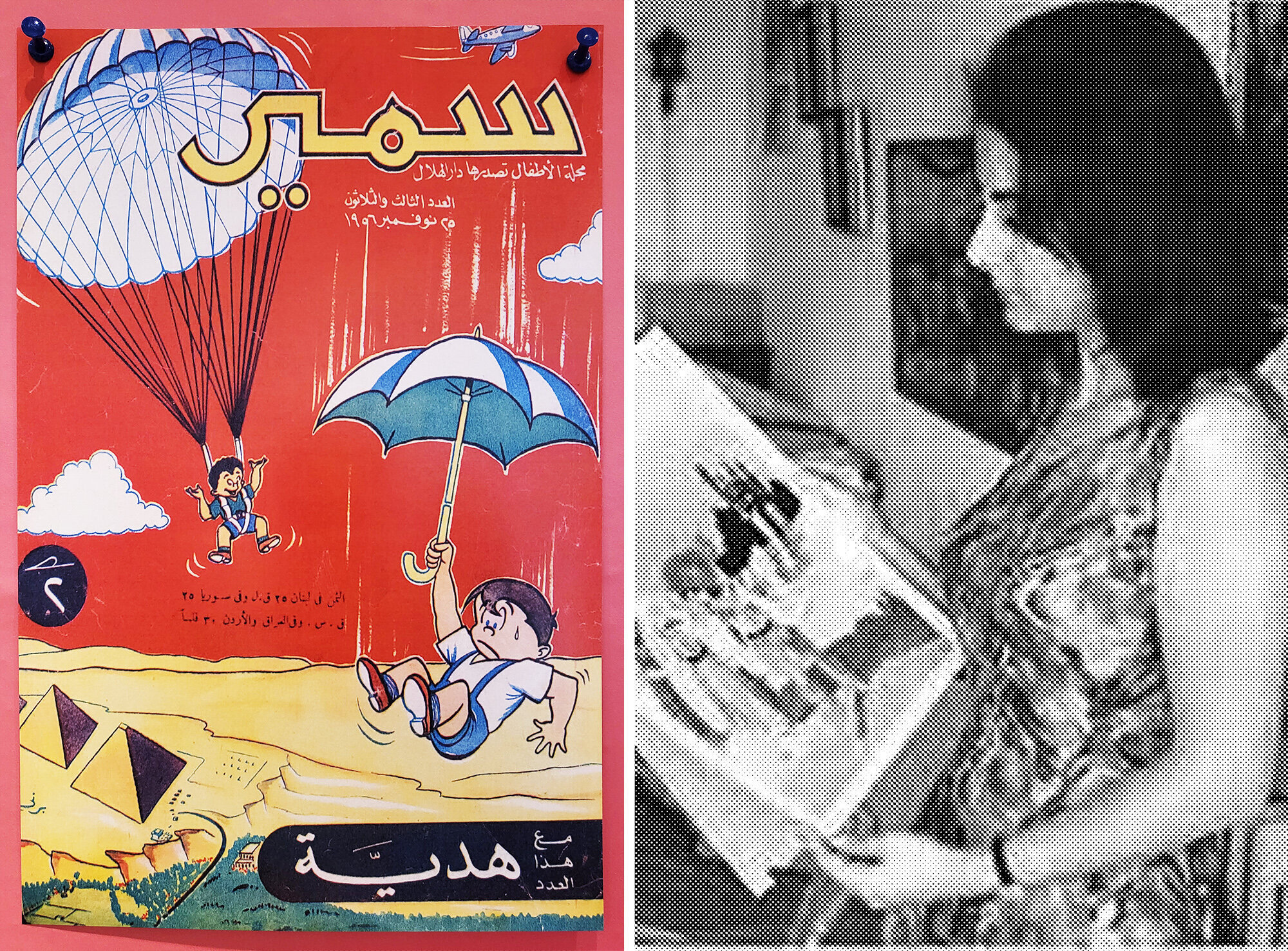
1956–1959 After an extensive ad campaign across multiple magazines, Samir #1 hit newsstands in April 1956 and sold 50,000 copies. Initially 16 pages, it soon expanded to 24, then 32. Sales bloomed to 80,000 copies—especially during Egypt’s short-lived union with Syria as the United Arab Republic from 1958–1961. Samir’s first year owed much of its visual identity to Haroun and the French-born Berny, who in 1957 was forced to return to France when his Egyptian residency wasn’t renewed, a policy Nasser's new ultra-national government applied to most foreign-born residents. The vacuum left by Berny was filled by Bahiga, an Armenian-Egyptian artist who was only 15 at the time. Around 1959–1960, Bahiga left Egypt for Lebanon, where she helped establish the comics magazine Bosat Al-Reeh (“Flying Carpet”), which became hugely influential across the Arab speaking world and the Levant more specifically. By 1965, she had immigrated again—this time to the United States, where she worked for Disney, Hanna-Barbera, and Universal Studios. |
|
Left: Samir #33, dated 25 November 1956, and featuring cover art by Berny. Right: The artist known as Bahiga examining proofs of her work. |
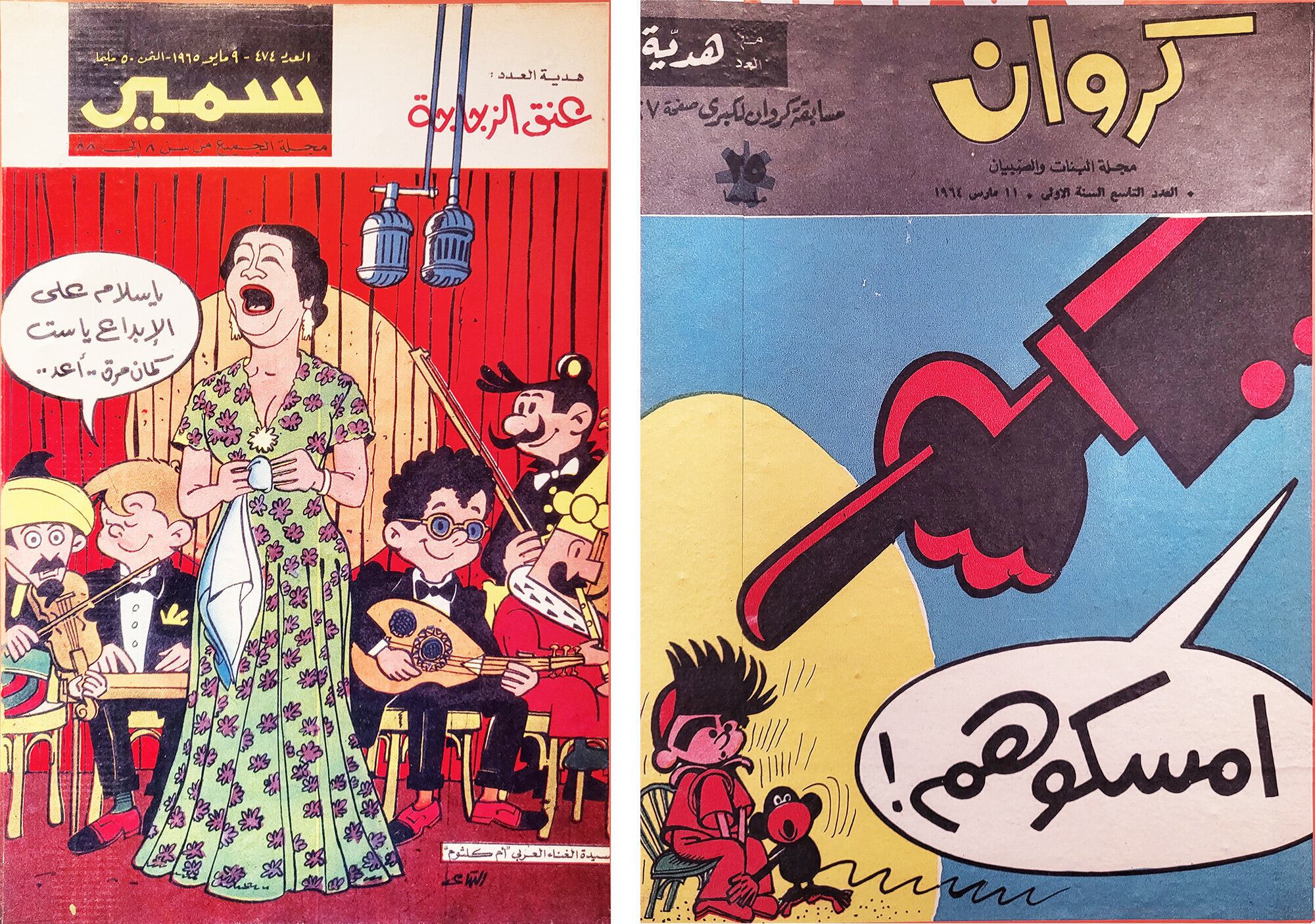
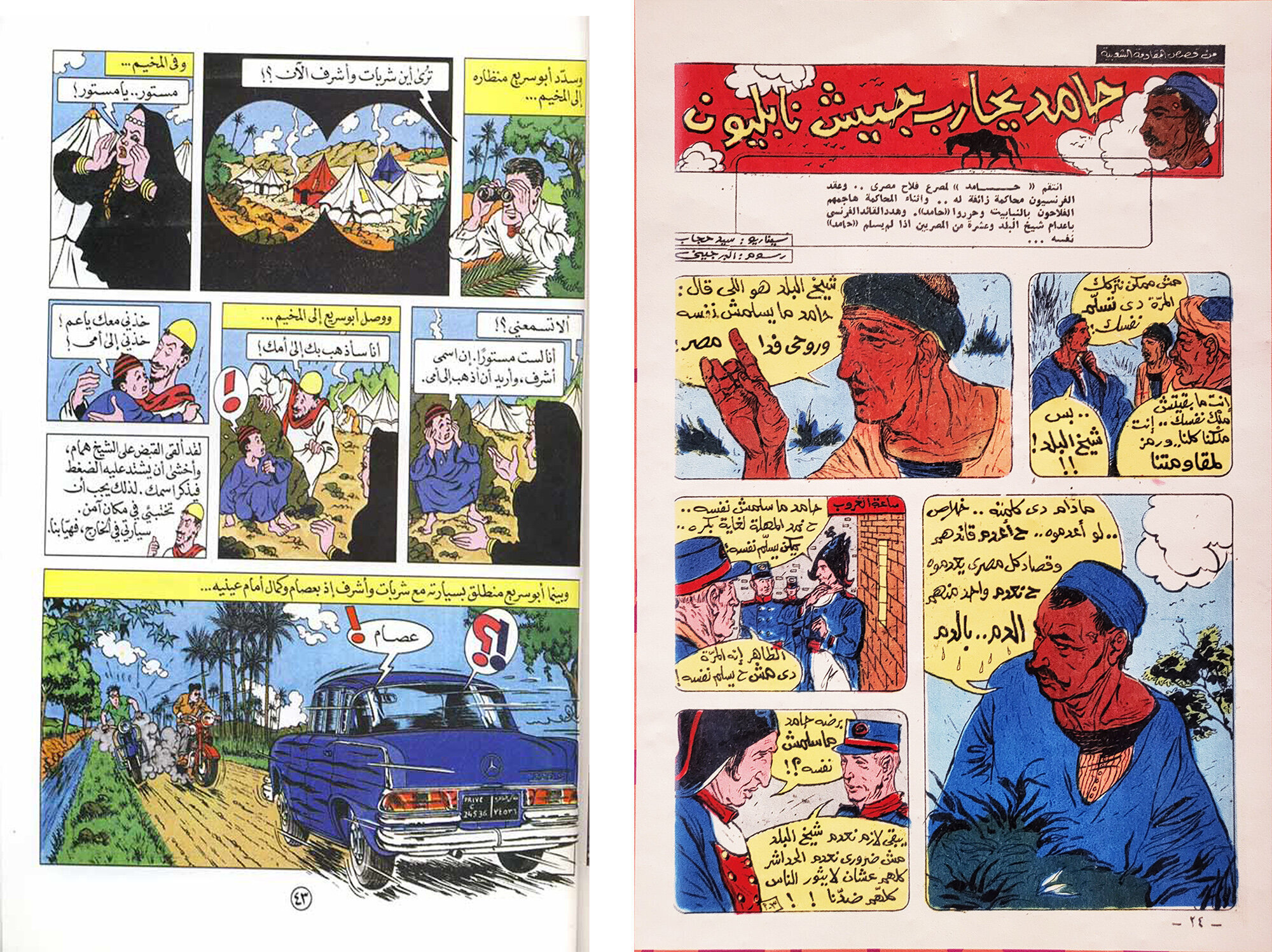
1960–1969 Egypt’s 1960s witnessed the continuation of Nasser’s sweeping nationalization campaign, and magazines were no exception. Samir was nationalized in 1966, after which its editorial direction became more staunchly anti-colonial. It was during these years that the magazine’s comics began to more clearly reflect Egyptian cultural specificities, thanks to the efforts of artists such as Roger Camille (who later immigrated to Belgium and contributed to Spirou under the nickname Kiko), Labbad, Hegazy, Altohami, Nesim, Albergini, Madi, Hazem, Barshumi, Amal Khattab, and Alaa Eldin Saad—all of whom helped make the 1960s something of a golden age for Egyptian comics. Many of Samir’s artists also contributed to a newly established magazine: Karawan. Launched in 1964 with a strong socialist-leaning agenda under author/editor Noaman Ashour and art director Mostafa Ramzi, it featured work by Labbad, Nabil Tag, Hakem, Magdy Naguib, Albirgini, Bahgat, Karam Badra, and Nabil Alsilmi. Labbad brought his recurring character Zaghloul Effendi, Nabil Tag introduced his fine ink work to a series titled "City of Tomorrow", and Albirgini focused on African adventures inspired by his travels through Ethiopia, Somalia, Eritrea, and Sudan. Karawan disappeared within less than a year of its inaugural issue—ironically due to the arrival of translated Superman comics, licensed by the same publishing house (Al-Ahram). It was Samir that managed to persevere. |
|
|
Top Left: Samir #474, dated 9 May 1965, featuring cover art by Altohami Top Right: Karawan #9, dated 11 March 1964, featuring cover art by Labbad Bottom Left: From the adventure comics of Roger Camille who would later become known in Belgium as Kiko Bottom Right: The work of Albirgini |
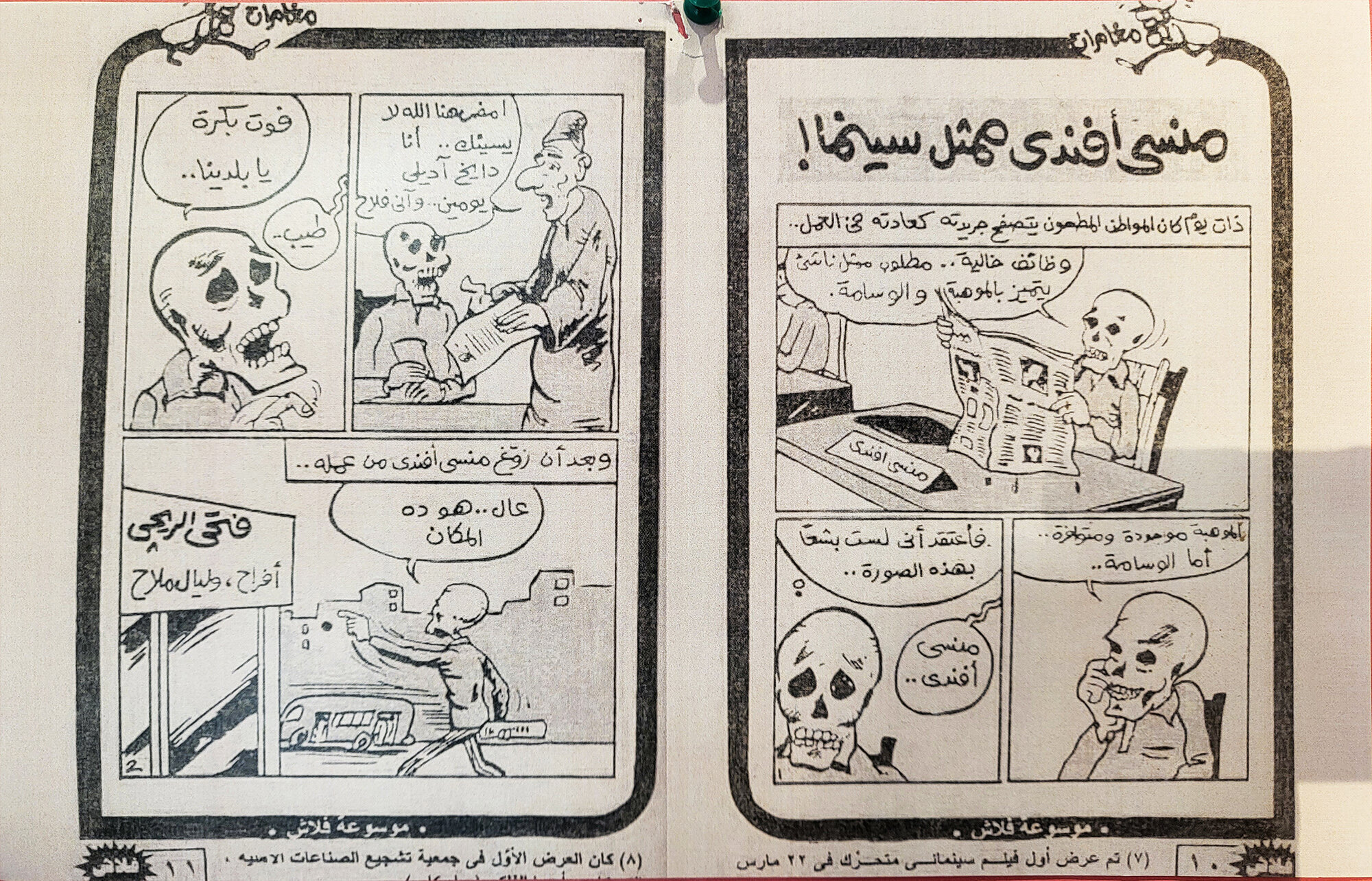
1970–1989 Many Egyptian comics artists left the country to help establish new comics magazines in the Gulf states—better funded thanks to oil wealth and eager to fast-track their own modern cultural identities. Majed, Basem, Saad, and Al-Arabi Al-Sagheer were among the most famous Gulf magazines pioneered by Egyptians. Dar Al-Fata Al-Arabi (“Arab Boy House”) was established in Beirut in 1974 and became especially famous for its art direction under Labbad, who oversaw operations from Cairo. Though primarily focused on illustrated children’s books, they published three influential comics albums: Rehlet Al-Sindibad Al-Thamena (“Sinbad’s Eighth Journey”) by novelist Sonallah Ibrahim and artist Nabil Tag, Dawaa Ila Paris (“Invitation to Paris”) by Samira Shafik and Ihab Shaker, and Tambol Al-Awal (“Tambol the First”) by Hegazy. Sandouq Al-Donia (“World Box”) appeared in 1977, also from the nationalized powerhouse Al-Ahram. Although the comics it featured were few, it introduced a new generation of illustrators. Most of the 1980s are considered a lull for Egyptian comics—until something very different appeared in 1989: Flash. Unrelated to DC Comics’ The Flash, Egypt’s Flash was a pocket-sized, one-man anthology by Khaled Alsafty, featuring short humorous comics with sharp social commentary. This is the Egyptian comics publication my generation remembers most fondly. Since 2005, Alsafty has worked primarily in editorial roles for Qatar-based publications. |
|
From the pages of Flash by Khaled Elsafty |
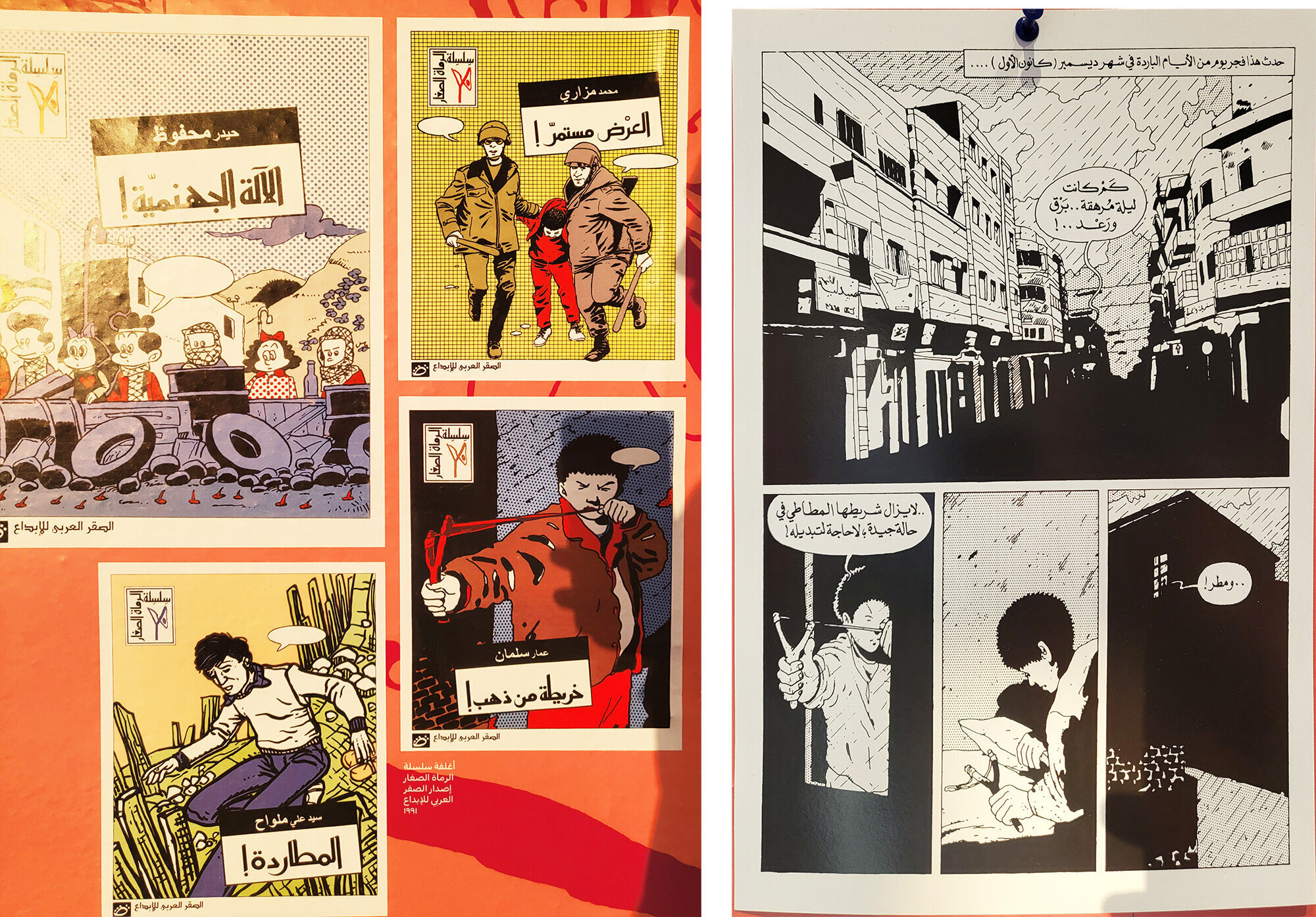
1990s Art-directed by Labbad, a series of gorgeous bande dessinée-style comics albums were published in 1991 by Alsaqr Alaraby (“Arab Hawk”), branded Alrumat Alsoghar (“Junior Marksmen”)—clearly a response to the first Palestinian Intifada. These included Khareeta Min Dahab (“Map of Gold”) by Ammar Salman, Alard Mostamer (“The Show Goes On”) by Mohammed Mazari, Alaala Algohanameya (“The Amazing Machine”) by Heider Mahfouz, and Almotarda (“The Pursuit”) by Sayyed Ali Melouh. In 1993, the weekly Alaa Eldeen magazine launched—its TV spots are etched in my memory. Another Al-Ahram production, its first issue featured comics starring its curious boy mascot Alaa Eldeen, written by Mohammed Almansi Andeel and illustrated by Walid Naif, whose art was, for me, the main draw. The magazine soon expanded its roster to include Hegazy, Ihab Shaker, Abd Elaal, Fawwaz, Galal Omran, Saad Eldeen Shehata, Ezz Elarab, and Algerian-born Borgi, who contributed two long-form serials: Tobool Ala Difaf Albohayrat (“Drums on the Banks of Lakes”) and Fee Hadaek Alshaytan (“In the Gardens of Satan”). Each ran around 60 pages and were later collected by Shorouk in 1999. In 1998, Bolbol debuted to compete with Alaa Eldeen. Its first few years featured notable work by Maalouf, Fawwaz, Abdelshafy, Sherif Alfar, and Diaa Anwar, but it soon leaned heavily on translated foreign comics rather than commissioning original Egyptian work. |
|
Left: Covers for Alsaqr Alaraby series of books, designed by Labbad Right: A page from Ammar Salman's "Map of Gold". |
2000s With few opportunities to publish adult-leaning comics through official channels, a budding independent scene began to emerge. After spending much of the 1990s working for children’s magazines, Alaa Eldeen Saad self-published a series of comics booklets for adults, distributing them himself near fine arts colleges. Labbad also began to put together an independent publication titled Abyad Weswed + (“Black and White +”), featuring work by Borgi, Alaa Eldin Saad, and Golo alongside his own—though only a single artist’s proof of issue #1 is known to exist. A comics workshop organized by Ahmad Alattar (now head of D-Caf) and led by Golo at the French Cultural Institute in Cairo took place in 2002, culminating in an anthology titled Seif Bin Zi Yazan. I remember being impressed by much of the artwork, though thoroughly confused by the story. Still, many of its participants—including Magdy Elshafee, Mohammed Salah, Hatem Fathy, Rania Hussein Amin, Sherif Sami, and Hazem Kamal—would go on to become central figures in the contemporary Egyptian comics scene.
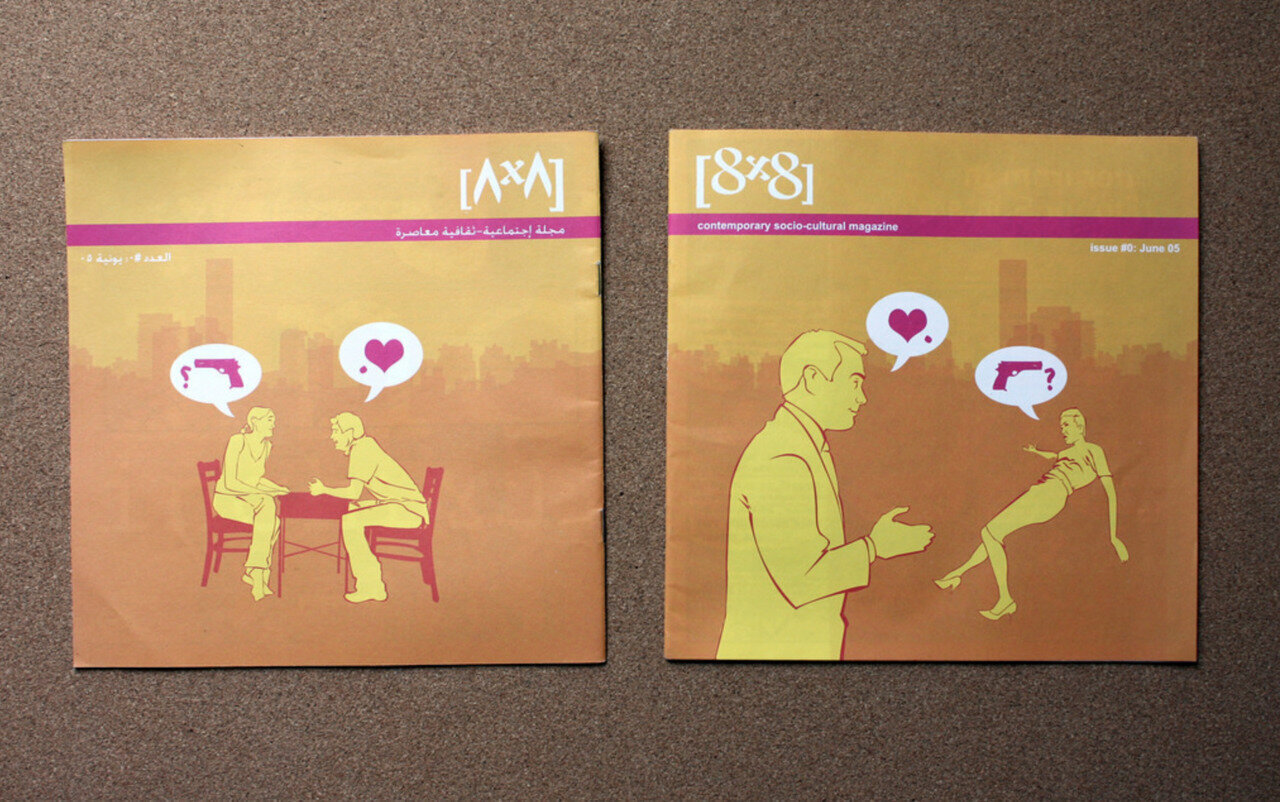
In 2005, I helmed the first publication of my own, [8x8], a bilingual sociocultural magazine that featured literature, poetry, and photography alongside original short comics by the likes of Hatem Fathy, Karim Hany, and myself. Funded and distributed by Cafe' Inch, a new venture that sought to become a kind of local Starbucks with many branches across the region, only one issue was released before being discontinued when the cafe was sold to a Gulf-based investor and subsequently went out of business. |
|
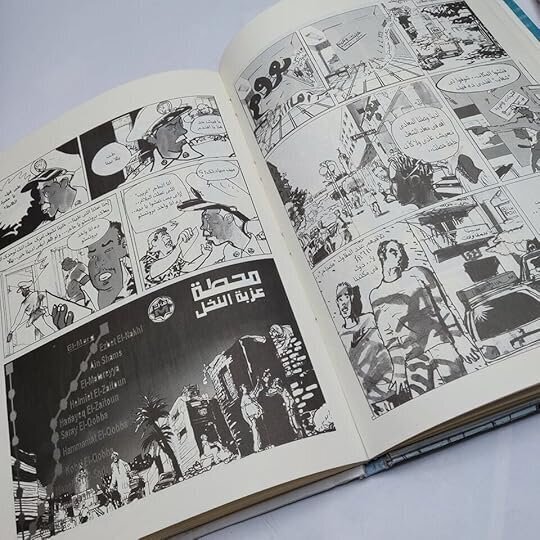
Then, out of nowhere, something extraordinary dropped in 2008: Metro by Magdy El-Shafee. Unlike earlier anthologies or serialized works, Metro was the first genuine Egyptian graphic novel for adults. At over 100 pages, it looked and felt substantial—its cover depicting a young man with a pistol, a rarity in Egyptian publishing. The story follows Shihab, a young man who decides to rob a bank, only to be thrust into a chaotic journey across the city through Cairo’s metro system. Through this tale of malaise, corruption, disillusionment, and police brutality in Mubarak’s Egypt are realisticly highlighted. Metro hit like a grenade: crafted by a first-time author, published by a first-time comics publisher, it unlocked the novelistic potential of comics storytelling in a distinctly Egyptian context—its ripple effects still felt to this day. |
A spread from Magdy Alshafee's hugely influential graphic novel Metro |
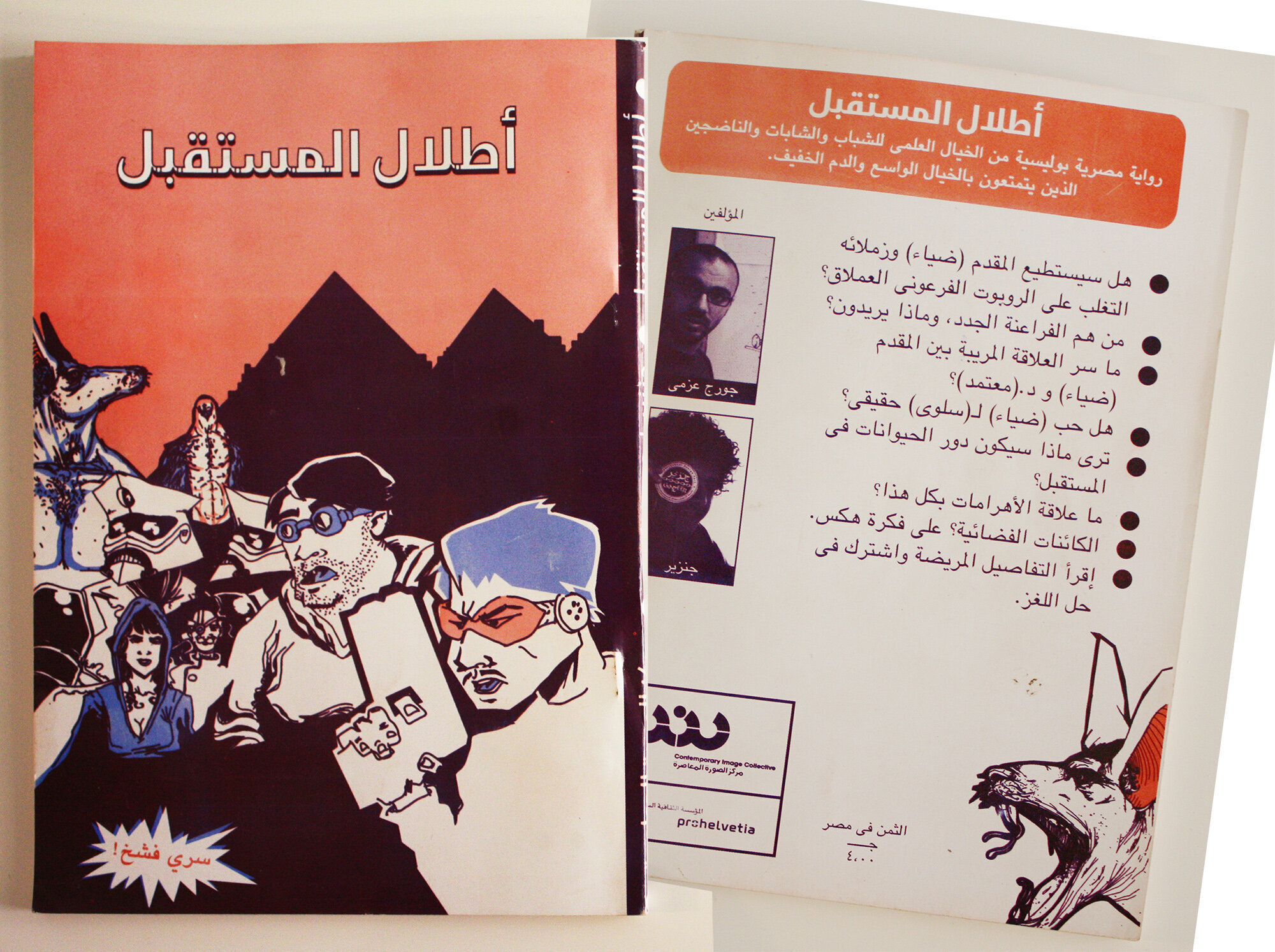
Only a year later, George Azmy and I came out with an attempt at a graphic novel titled Atlal Almosaqbal ("Ruins of the Future"). Split in two chapters of about 40 pages each, each chapter was undertaken by the artist separately. Although drawing heavily from the pocket stories we read as children, the [very quickly produced] graphic novel was geared towards adults. Published by the Contemporary Image Collective—an art space—the book only saw a limited release and most copies ended up sitting in the CIC's storage due to lack of a legal publishing license apparently. |
Atlal Al Mostaqbal ("Ruins of the Future"), my strange but fun collaboration with George Azmy circa 2009. |
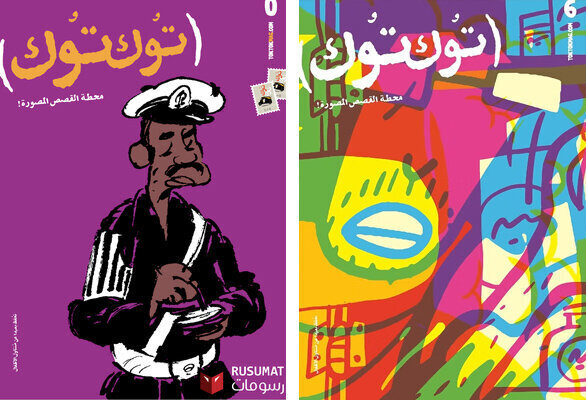
Then came January 2011—just weeks before the uprising that toppled Mubarak—with the launch of Toktok, an independently produced comics magazine. The launch party, held at Cairo’s now-defunct Townhouse Gallery, drew a huge crowd. Helmed by Shennawy and featuring stellar work by Makhlouf, Tawfik, Hesham Rahma, and Andeel, the magazine was the first of its kind to feature short comics for adults. Still rich with humor (as Egyptians can’t seem to help themselves), Toktok gave top-tier Egyptian cartoonists a space to probe culture and society with joyful maturity. |
Left: Toktok #0 with cover art by Shennawy. Right: Toktok #6 with cover art by Andeel. |
Over the course of 10 years, Toktok released 16 issues, its roster expanding with each one. Its success solidified Shennawy’s central role in the Egyptian comics scene—especially as he took over Cairocomix (initially co-founded with Magdy Elshafee) almost entirely from 2019 onward and launched his own publishing venture, The 9th Art. Art organization Mazg appeared in 2013 with a strong focus on comics, producing several anthologies through workshops and, in 2021, establishing a comics school offering professional training and courses. |
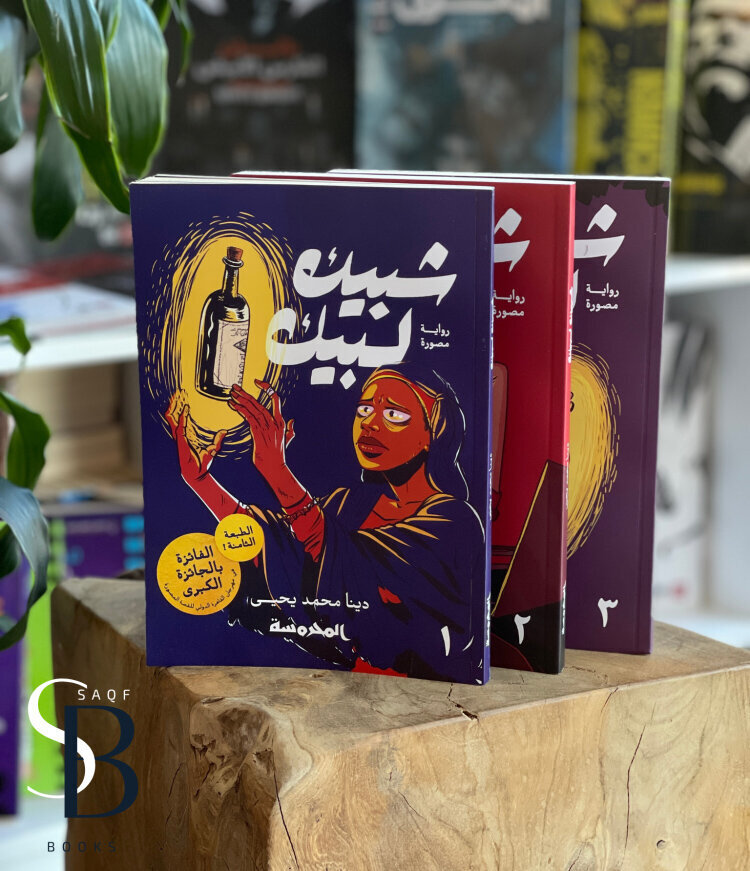
The Arabic edition(s) of Deena Mohammed's wonderful Shubeik Lubeik, initially released in three parts. |
From 2011 onward, a wave of independent comics anthologies emerged—Autostrade, Allak Feen, Alshakmageya, Foot Aleena Bokra, and Garage among them. From around 2017, Egypt saw a graphic novel boom from publishers like Almahrousa, Ein, The 9th Art, and most recently Diwan Publishing, thanks in large part to Cairocomix’s growing popularity and the breakout success of Deena Mohamed’s truly fantastic Shubeik Lubeik, which was picked up by Pantheon in 2022 and subsequently translated into French and Italian.
The pathways yet to be carved by Egyptian comics makers is for sure unpredictable, but if this year's Cairocomix is any indication, a flourishing in the scene is certainly underway. |
Ganzeer
Cairo, Egypt
10.11.25 |
|
Support RESTRICTED FREQUENCY for a chance to win something special like the awesome reader named below. |
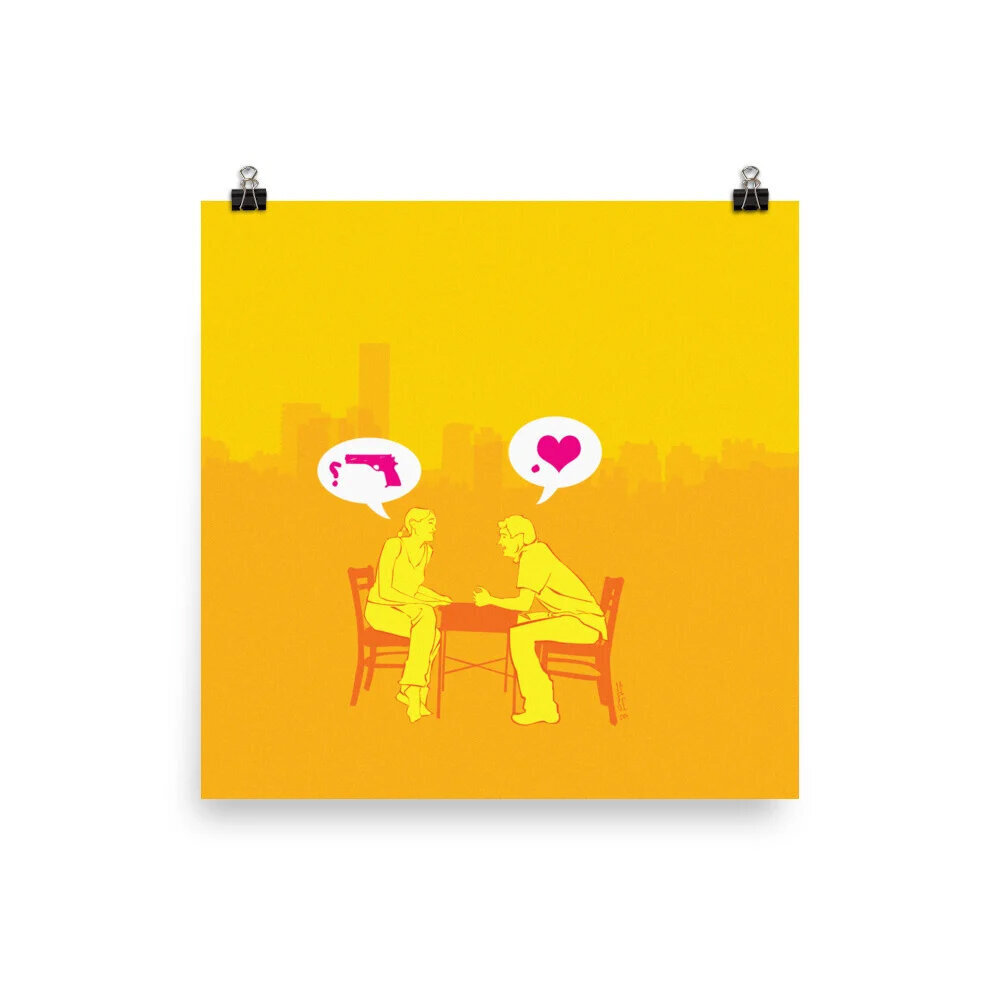
Congratulations, Al! You will be receiving a poster featuring my cover art for the short-lived [8x8] magazine, the files for which were unearthed after rediscovering a dusty old external hard-drive upon my return to Cairo! Hope you like it. |
|
|
|
Do you too put out a regular newsletter? If the answer is yes, how would you like to swap ads and cross-promote across one another's newsletters? Preference will be given to newsletters that cover one or more of the following categories: |
|
|
|
"[Arab book makers of the past] didn't used to fill the entire page with text, instead they only used about 3/4 the page, leaving a thick blank margin for readers to annotate with their thoughts, comments, and opinions. Sometimes such annotations got so long and dense that they eventually got turned into entirely new books in their own right!" - Labbad |
|
Speaking of comics, I am but one page away from finally completing my ill-advised magnum opus, THE SOLAR GRID, a graphic novel 10 years in the making. Then it's just a matter of post-production and final edits before going to print. 🤞 |
|
|